
Sunday, January 5, 2014


Saturday, January 4, 2014
Series Launch: Shaken To Its Core
It goes without saying that Great Depression brought about a dramatic change in the American landscape. President Franklin Roosevelt pressed through Congress a series of strikingly liberal legislation know as the New Deal ushering into the American political culture the notion that the public’s welfare was in fact the government’s responsibility. Roosevelt intentionally used his soothing firesides chats, careful manipulation of the media and overtly personable wife as a proxy to create, at least on the surface, a culture of calm. Americans were encouraged to pray, stick together, and most importantly have faith in institutions of government.
Yet, the Great Depression was a time wrought with political, spiritual, economic and cultural upheaval. The cocksuredness of the 1920’s was replaced by a radicalism never before seen and an overarching tension that could, and did, erupt into utter chaos. Radical political parties, firebrand personalities, and riots left only a thin veneer of a nation recovering through self reliance and determination. Over the next three posts, The History Podcast will highlight some of the lesser known elements of the Great Depression as we look at the rise of radical political parties, Father Charles Coughlin who Franklin Roosevelt is reportedly to have said to be “the most dangerous man in American” and the food riots that increasingly became common in American cities.
THe History Podcast #18 - The Deadliest day during the Iraq War and No One Knows
 The History Podcast #18
Download Podcast -The Deadliest day during the Iraq War and No One KnowsThis history podcast discusses the deadliest day during the war in Iraq. There is just one strange thing: hardly in one in America knows that it happened. Nearly one thousand people died in Baghdad on one day, but there is very little media information to explain the circumstances. Find out what happened and why you do not know about this day.
History Podcast #17 - James Otis Jr.
The History Podcast #17
Download Podcast - James Otis, Jr.
The History Podcast explains the beginning of the American Revolution. Most Americans are not aware of the person that ignited the revolution. Therefore, most Americans do not know that our country was started by a crazy person (I suppose the politically correct term would be mentally ill). James Otis Jr. got this whole crazy country started. It's time to know a little more about the guy.
The History Podcast #16 - Sneakers

The History Podcast #16
Download Podcast - SneakersIn this History Podcast Mr. Lincoln gets a new pair of sneakers. We argue and debate whether sneaker fashion is a culture or a fad. Mr. Lincoln explains how sneakers became an important statement in the urban areas. Mr. Jackson thinks it's all stupid and loses it.
Friday, January 3, 2014
The History Podcast #15 - YouTube Comments, Anonymity, and Vigilantes
 The History Podcast #15
Download Podcast - YouTube Comments
This History Podcast dives in to the world of YouTube comments. We debate freedom of speech and the changes being made at major websites. We also look at how China's Human Flesh Search Engine doesn't play games with idiots on the internet. In america, we will suffer a fool, but in China, good luck. The phrase translates differently - the internet knows you're a dog.
The History Podcast #14 - Netflix
The History Podcast #14

Download Podcast - Netflix
This history podcast explores the history of Netflix. Over the last 15 years many experts and consumers have written off Netflix, but here we are today with Netflix trading for over $350 a share. Netflix abandon their business model, cannibalized their loyal consumer base, and began creating their own content. They fought against a superior Blockbuster, changed pricing and plans, and pretty much did what THEY wanted. We were all so certain they would fail with each mistake, but we were wrong; the public usually is. Why has Netflix become so successful?
Thursday, January 2, 2014
Book Review - Obama's War by Bob Woodward
When delving into anything written by Bob Woodward, one must give serious credence to his somewhat liberal bent. He is after all the slayer of the un-slayable Conservative Richard Nixon. He has been outspoken in his support of President Obama, and his policies. However, Woodward is still a top rate journalist and is, for the most part able to step off the slant and do his job well. This book is well researched and very well documented. Look not for any “Deep Throat” type sources, but Woodward does interview those that are pertinent to the story at all levels.
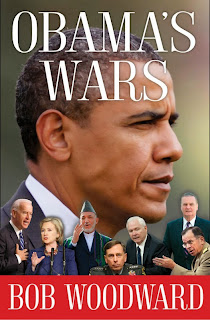 I read this book as the combat almost two full years after the last combat troops were pulled out of Iraq, and during the handover to NATO troops in Afghanistan, but the insight to those decisions could not be clearer. Throughout the book, Woodward documents the critical decisions making process taken by the administration, that at times was nearly paralyzed by turf wars and backbiting.
Early into the book Woodward’s bias is first betrayed. In the first few chapters great pain is taken to describe the pitfalls of the Bush administration’s handling of the war, and the residue of those maneuvers on current events. As the book proceeds, it is easy to see a “us verse them” mentality between military and civilian leaders was very present and well established by the time President Obama takes office. The facts, as presented by Woodward, show the measures taken first by Candidate Obama, President-Elect Obama and finally President Obama to utilize the military. Those measures were soundly rebuffed on all fronts with few exceptions.

Early into the book Woodward’s bias is first betrayed. In the first few chapters great pain is taken to describe the pitfalls of the Bush administration’s handling of the war, and the residue of those maneuvers on current events. As the book proceeds, it is easy to see a “us verse them” mentality between military and civilian leaders was very present and well established by the time President Obama takes office. The facts, as presented by Woodward, show the measures taken first by Candidate Obama, President-Elect Obama and finally President Obama to utilize the military. Those measures were soundly rebuffed on all fronts with few exceptions.
Movie Review: Game Change
 I recently re-watched Game Change staring Julianne Moore and Woody Harrelson. With more time on my hands, and a few more years away from the film, I cannot help but be glad the McCain/Palin ticket did not come out on top.
Those who would defend Palin would cite that she had just recently given birth, had a pregnant teen-age daughter, and a son shipping off to Iraq as distractions from the campaign. Those individually would cripple lesser people, but the hubris shown by Palin only compounded them. Most people understand politics to be a rough and tumble areana that is not for the faint of heart. All who enter the fray under even the best of circumstances are worn down. Palin was even warned about how hard it would be but she waved them off. Simply by denying how hard it would be was but the first of Palin's problems.
Wednesday, January 1, 2014
The History Podcast #13 - Dixie
 The History Podcast #13
Download Podcast - DixieThis history podcast dives into the history of the song "Dixie." We debate racism and whether the song is still appropriate today.
Subscribe to:
Posts (Atom)